


Total Lunar Eclipse during upcoming Portal: March 3, 2026

Portal has eclipse history.
In April 2024, we gathered in Mazatlán for the Portal Eclipse Festival (April 5–9). It was a real event: talks, workshops, yoga, and nights of music. People arrived for the solar eclipse, and a lot more happened alongside it—conversations that ran late, unexpected connections, and that feeling you get when a group of strangers becomes a temporary village.
Afterward, we all went back to regular life. Jobs, families, distance, the usual gravity. The conversation went quiet for a while.
But the thread stayed.
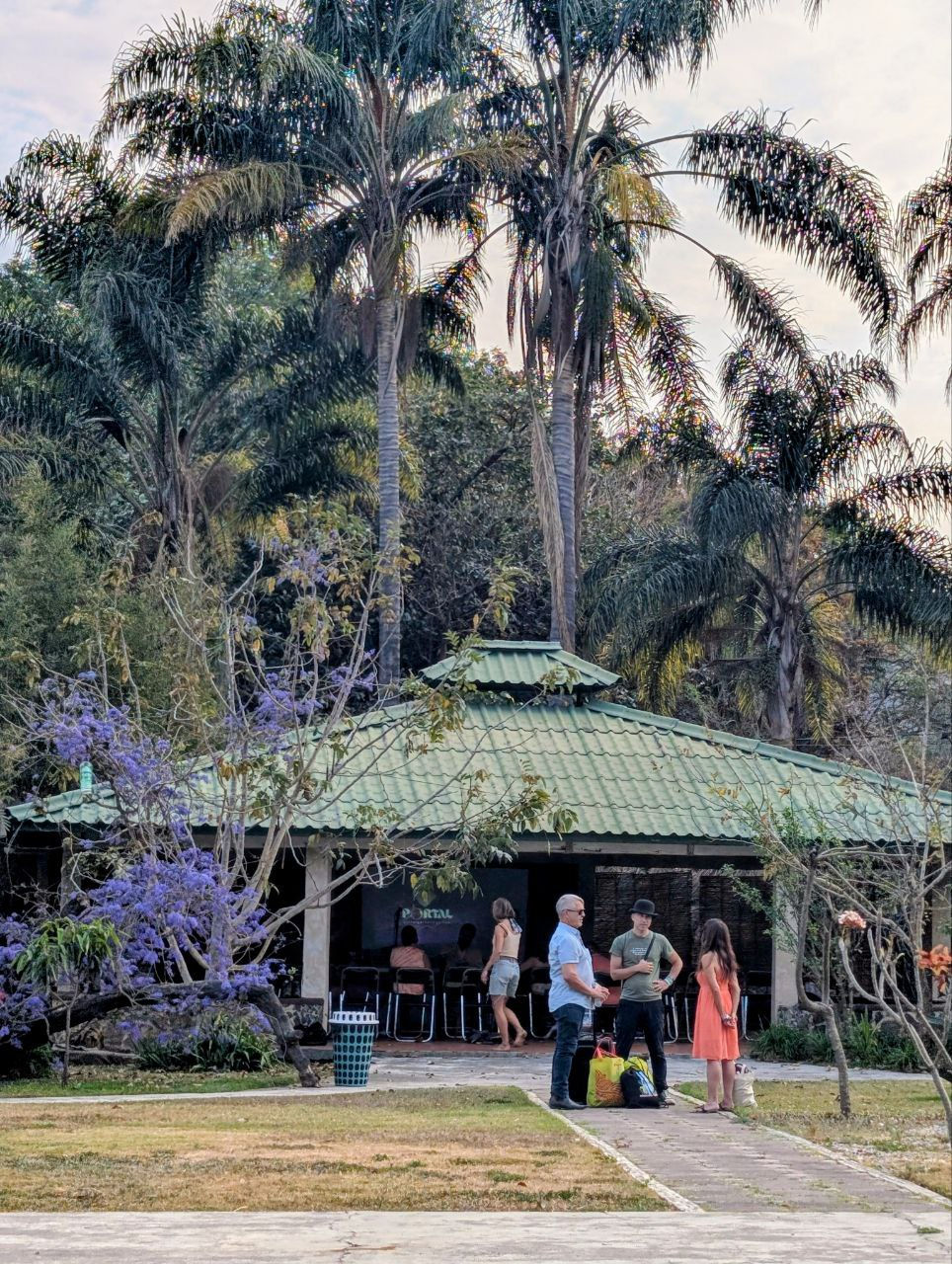
Portal Gathering 2026 is March 1–6 in Tepoztlán, Mexico. The Mainstage days are March 2–4, in an intimate garden venue. This container is smaller by design, so the connections can actually form. Less “event mode.” More being with each other.
And inside that week, we get another alignment.
On the morning of Tuesday, March 3, 2026, there will be a total lunar eclipse visible from central Mexico. The Earth will move between the Sun and the Moon, and the Moon will darken and shift into a copper-red color as it passes through Earth’s shadow.
This one is not a daytime spectacle. It’s pre-dawn.
No big build-up. No countdown screen. No need to plan your whole day around it.
If you’re awake, you can step outside and catch it.
Eclipse timing (Tepoztlán, Mexico — CST / UTC−6)
Here are the stages that most people actually notice, in local time:
Partial eclipse begins: 3:50 AM
Totality begins: 5:04 AM
Maximum eclipse: 5:33 AM
Totality ends: 6:02 AM
Partial eclipse ends: 7:17 AM
These times are based on the published eclipse stage times and converted into CST (UTC−6). Source: timeanddate — Total Lunar Eclipse March 2–3, 2026
A simple way to think about it:
If you only catch one moment, aim for around 5:30 AM.
That’s the peak window.
What it is (and what it isn’t)
A lunar eclipse is different from a solar eclipse.
You do not need eclipse glasses. You do not need any special equipment. It’s safe to watch with your own eyes.
It’s also not the same kind of “wow” as a solar eclipse. It’s slower. Quieter. More gradual.
The shift is subtle at first. Then, somewhere in the middle, you realize the Moon has changed.
That’s the moment.
During totality, the Moon is dim enough that more stars can appear around it than you’d normally see on a bright full-Moon night. If the sky is clear, it can feel like the sky opens up a little.
Practical notes (because it’s 5 a.m.)
This will be happening in the coldest part of the night, right before sunrise.
If you step out, bring what you need to be comfortable:
A warm layer (or two)
A blanket or shawl
A hot drink if you want it
Something easy on your feet if you’re walking outside on uneven ground
You don’t need to turn it into a production. The point is the opposite.
Just step outside, look up, and let it be simple.
How this fits into Portal
For some people, this is just a cool sky event that happens to land during the week.
For others, it will feel like part of the Portal thread.
Not because we’re trying to assign meaning to it, but because Portal has always been about being present for what’s real—together—when the timing is what it is.
Mazatlán had the intensity of a solar eclipse festival.
Tepoztlán is a different shape.
Smaller. Closer. Less noise.
And then, in the middle of that, the Moon moves into shadow.
If you’re awake
We’re not scheduling this as a formal activity, and you don’t need to plan your night around it.
But if you wake up naturally, or you’re still up, consider stepping outside for a few minutes.
Look at where the Moon is. Notice what it’s doing.
If you catch the peak near 5:33 AM, you’ll see the deepest color.
If you only catch ten minutes, that’s enough.
If this kind of moment matters to you, you’ll know what to do.


Comments